Thoughts and Things: A Blog by Mac Thiessen

This is my blog. I don't post regularly, but when I do, I always use spellchack. 
Notify Me

A TED talk about Prognosis

7/8/2017

0 Comments


​While I was in my medical oncology training at the University of Manitoba I met a lot of wonderful people - including patients, and their friends and family -  who were dealing with the life threatening and terrifying diagnosis of cancer.


For most people, facing the reality of death and dying is not something that happens every day. Watching and learning from the patients that I was in contact with taught me a lot about life, and made me think about what is important to me on a daily basis. It also made me think about what I would want to have happen and be told if I was facing cancer or any other life threatening diagnosis.

This TEDxManitoba presentation was a few years ago, and at the time I wanted to connect with the public about the topic of prognosis, specifically regarding death. In preparation for the talk I sent out an online survey asking people if they would want to know when they were going to die. The responses I got were amazing and not only helped me build the talk, but they also helped guide my practice by gaining insight into what is important to people. The challenge is: how do physicians, researchers, and clinicians determine what information is important to which patients and share it in a way that is useful.

I think sharing information including prognosis, can be done in a number of ways, depending on the patient. In the talk I used a couple of different strategies in the - humor, statistics, quotes from the survey respondents and incorporating the brilliant artist, Dianne Conrad. In the clinical context, not all of these are appropriate or practical. But in the presentation format it was really exciting to sharing my perspective on a topic that is important to me with the public using a number of different strategies, and I hope by using the different tools that I did, my message was able to connect with a wider audience.

I had a great time putting the talk together, working with my amazing Tedx mentor - Mary Anne Issak - meeting the other presenters and the hardworking and dedicated organizers.

Four years later, after practicing independently as a physician and completing my masters work, my perspective on sharing prognosis and its importance continues to evolve. I sometimes wonder what I would change in this Tedx talk if I were to give it again, but I am certainly proud of the steps I took through this presentation to be part of the important conversation about what people want to know regarding end-of-life and in bringing a topic that clinicians struggle with into the public eye.
0 Comments

The Butterfly Effect

9/20/2016

0 Comments

 
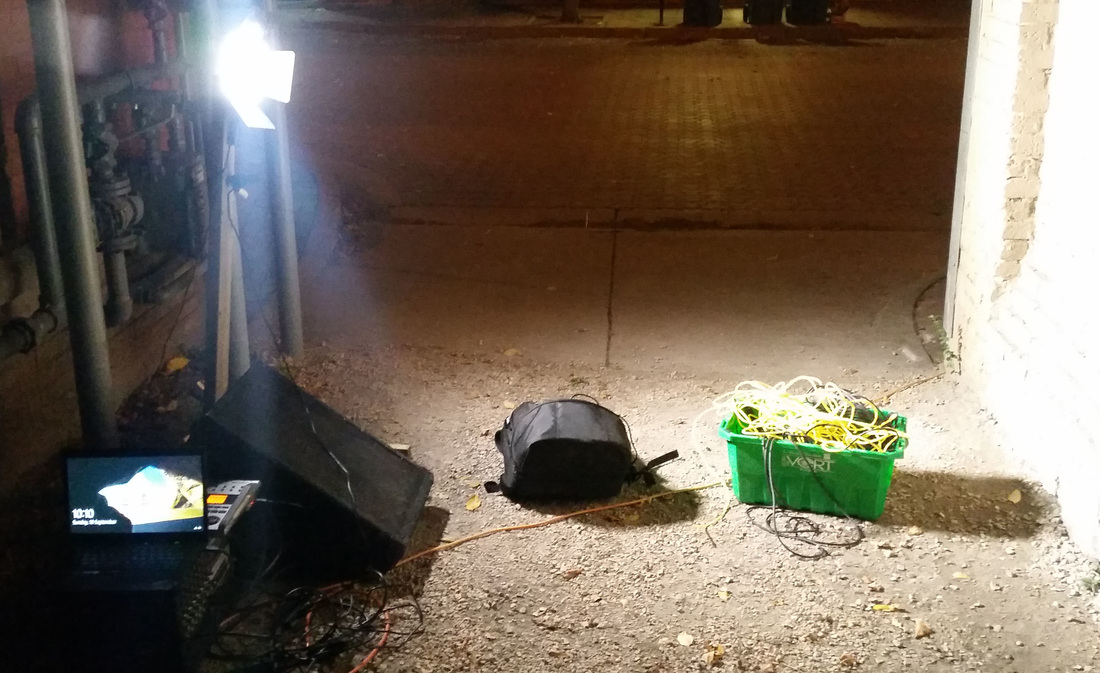
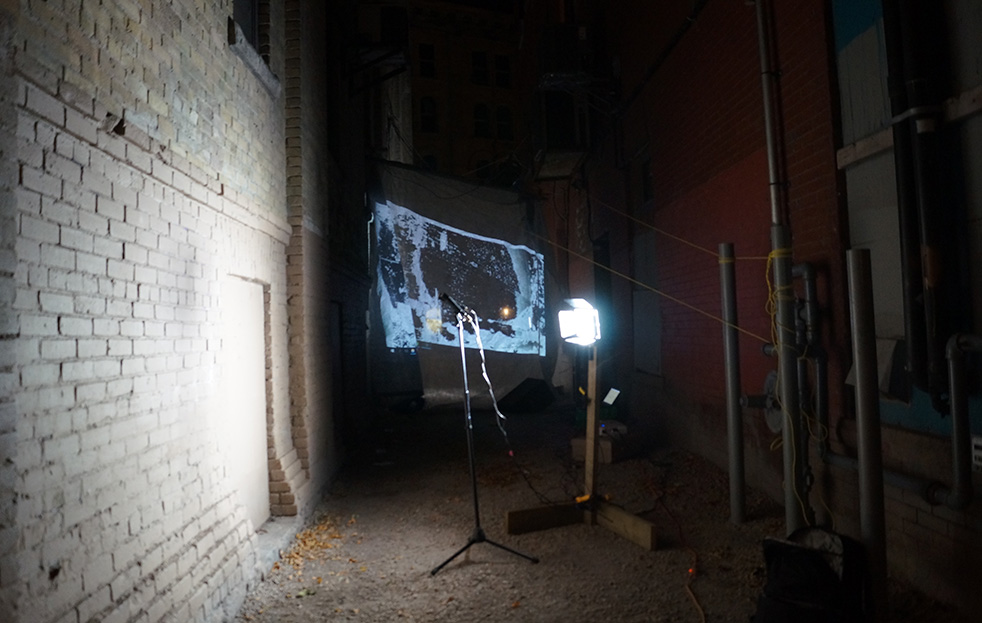
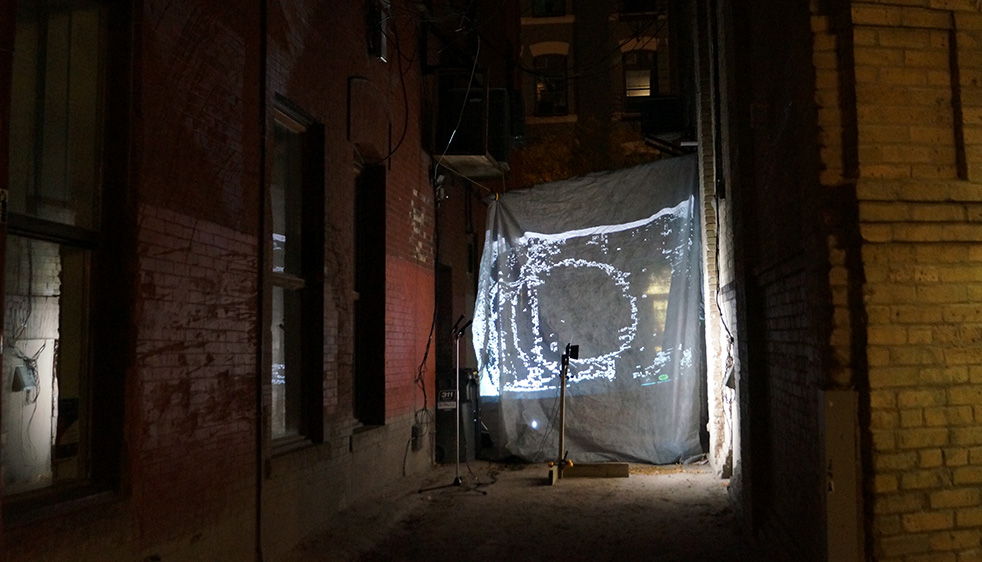
This installation was presented in October 2016 as part of Nuit Blanche in Winnipeg Manitoba

When I think of communication I usually think of how people share information with each other. Most of the communicating we do with others is pretty easy and is of little consequence. Texting a friend about where we are meeting for supper or arranging an appointment with my car mechanic. But sometimes communication gets more challenging. Why did my friend not return the text message that I sent them? Why did my mechanic not explain to me that they would need to keep my car for a week when I dropped it off? Text messages that go unanswered and learning that I will be without a car for a week is annoying, but rarely do these things have serious consequences. However, especially in healthcare, the consequences of ineffective communication can be far more serious.

Helping patients and their families understand how treatment and illness will affect their lives can be one of the most challenging parts being a healthcare worker. As a researcher who has spent time speaking with patients and their families, I have learnt that patients are often frustrated with not understanding how their diseases will affect their ability to carry out their lives. As a physician, I am always concerned that the information I share is done in a way that it is understood.

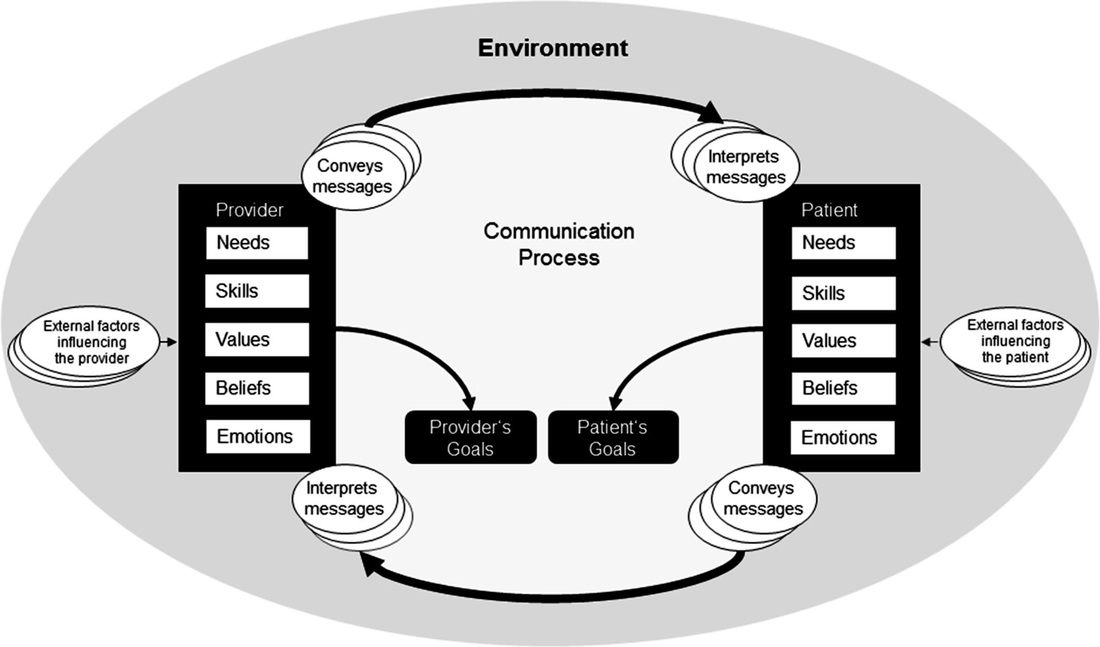
Research suggests that there are many variables on both sides of patient-clinician communications that affect the effectiveness of communication. Fear, anxiety, time pressure and lack of information are all variables that have been cited to affect how clinicians and patients communicate with each other. Dr. Feldman- Stewart et al. (Figure 1) suggests that communication in the clinical setting is also affected by the personal goals that both the clinician and the patient brings into the communication.

There is evidence that exists in the medical literature that there is room for improvement in how healthcare workers and patients communicate. As a physician I have had interactions with patients that I am confident went very well, but there are also ones that I wish I could do over. In my research, from speaking to patients about their experiences with doctors, it seems that everyone has had communication experiences that are good as well as some that are bad. What can be done to help clinicians and patients have more good experiences with communication, and less bad ones?

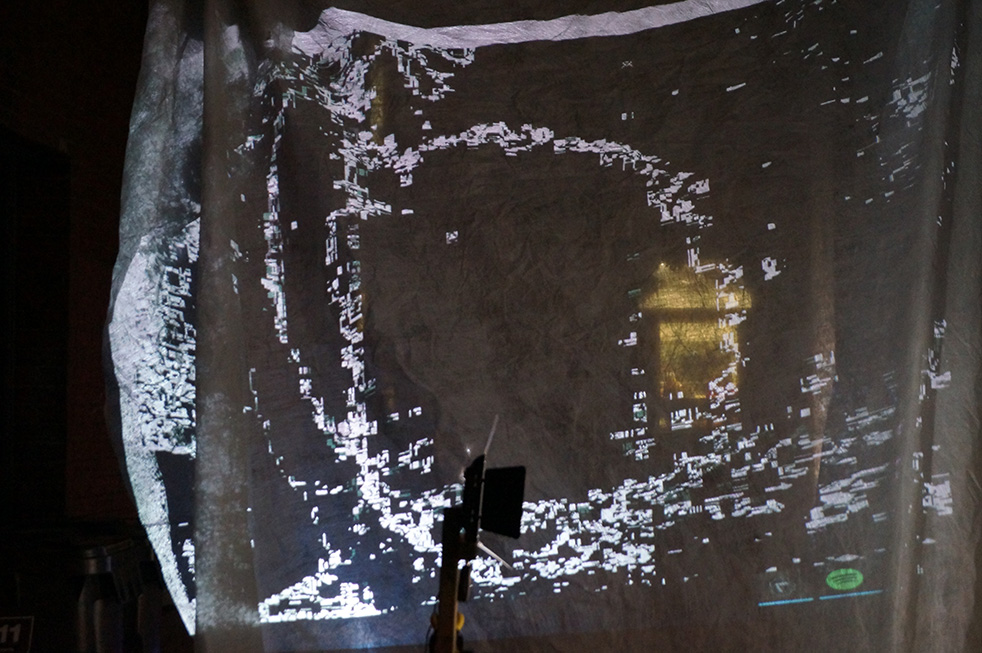
I think one way to evolve how patients and healthcare workers communicate is to bring attention to the challenges of communicating. By transforming an alleyway using light and sound, passersby will have the opportunity to communicate with strangers on the other end of the alley. This installation is designed to be fun, entertaining and a space to get people talking about what affects communication. 
​
This installation creates an experience not unlike the communication that occurs between patients and clinicians. First, the environment in which healthcare communication takes place is often unfamiliar to at least one of the parties involved in communication.

Second, we often take for granted that when we are speaking the same language. But in the clinical setting, the language used by doctors is not always the easiest for patients to understand. There may be technical terms or nuances that may be easily misunderstood. In this installation, one of the challenges is to communicate without the tool of spoken language.

Third, external factors can affect communication. Mood, previous experiences, and expectations are  all just a few of the things that can affect clinical interactions. In this installations, microphones are used to manipulate the light and sound being exchange between the individuals communicating.
​
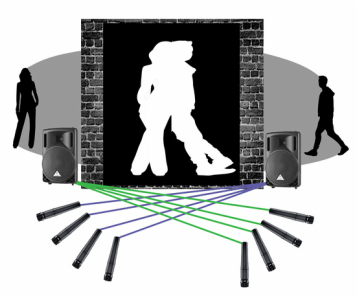
Fourth, when both the patient and the physician can communicate effectively, the result can be trans-formative and able to positively influence the life of the patient. In this installation, when two individuals are able to communicate, from opposite sides of the alleyway, the installation transforms (Figure 2). The images seen on the screen fold on their vertical axis, joining at their spine to form an image that may resemble a butterfly, while the sound produced shifts from noise into music.
Picture
Figure 1. Schematic of patient-professional communication framework from Feldman-Stewart et al. Psychooncology 2005;14:801-9
Picture
Figure 2. Simplified depiction of installation when cameras on each side of the alleyway are occupied.
0 Comments

    Author

    I am a husband, musician, runner, researcher and physician. I am currently very happy to be working as a medical oncology fellow at the Tom Baker Cancer Center in Calgary Alberta.

    Archives

    July 2017
    September 2016

Powered by Create your own unique website with customizable templates.